Industry-Academia Co-Creation Symposium “Advanced Research at The University of Osaka for Global Challenges”


At Expo 2025 Osaka, Kansai, Japan, universities and companies came together under the concept of “People’s Living Lab – A laboratory for a future society” to explore new possibilities for the future. This symposium aims to carry that momentum forward by promoting industry-academia co-creation to address social challenges and create new business.
The program will feature a keynote lecture by Professor Shimon Sakaguchi, a 2025 Nobel Prize laureate in Physiology or Medicine. Leading researchers from The University of Osaka will also present cutting-edge research in six key fields: advanced medicine, biotechnology, materials, semiconductors, quantum technology, and fusion energy.
The event will also include around 20 research seed showcases from The University of Osaka and other institutions, as well as a networking session.
This symposium offers participants a broad look at some of Japan’s cutting-edge research. We look forward to your participation.
※日本語ページはこちら
The program will feature a keynote lecture by Professor Shimon Sakaguchi, a 2025 Nobel Prize laureate in Physiology or Medicine. Leading researchers from The University of Osaka will also present cutting-edge research in six key fields: advanced medicine, biotechnology, materials, semiconductors, quantum technology, and fusion energy.
The event will also include around 20 research seed showcases from The University of Osaka and other institutions, as well as a networking session.
This symposium offers participants a broad look at some of Japan’s cutting-edge research. We look forward to your participation.
※日本語ページはこちら
-
開催日時
- 2026年8月28日(金)
-
開催時間 等
- Date: Friday, August 28, 2026
Symposium: 13:00–16:40、Networking Session: 16:40–18:00 -
場所
- Venue: Hall, 3rd Floor, Osaka International Convention Center (Grand Cube Osaka)
(5-3-51 Nakanoshima, Kita-ku, Osaka)
x 地図情報はこちら -
対象
- 全対象向け (※Open to all)
-
主催
- (Organizers)The University of Osaka, Osaka Chamber of Commerce and Industry, Osaka International Convention Center Corp.
-
共催
- (Co-organizers)Kansai Bureau of Economy, Trade and Industry; Osaka Prefectural Government; City of Osaka
-
Participation Fee
- Free
-
Program
-
<Symposium>13:00~16:40 ※AI-based automatic English translations of proceedings will be shown on screen at the venue.※
1.Opening Remarks
KUMANOGOH Atsushi, President, The University of Osaka
TORII Shingo, Chairman, Osaka Chamber of Commerce and Industry
2.Keynote Lecture
“Regulatory T Cells: From Their Discovery to the Development of New Immunotherapies”
2025 Nobel Prize laureate in Physiology or Medicine
SAKAGUCHI Shimon, Distinguished Honorary Professor, The University of Osaka
3.Advanced Research Presentations
Leading researchers from will present advanced research in six key fields.
【Advanced Medicine】“Current Status and Future Prospects of Designer Immunotherapy: The Era of Using Cells as "Medicines"”
HOSEN Naoki, Professor, Department of Hematology and Oncology, Graduate School of Medicine, The University of Osaka
【Synthetic Biology and Biotechnology】"Japan’s Growth Strategy and the Potential of The University of Osaka"
OMASA Takeshi, Senior Vice President, Dean, Professor, Graduate School of Engineering, The University of Osaka
【Materials】“Cutting-edge 3D printing as a trigger for material & green innovation”
NAKANO Takayoshi, Distinguished Professor and Vice Dean, Graduate School of Engineering, The University of Osaka
【Semiconductors】“Cutting-Edge Semiconductor Manufacturing Processes Enabled by CLBO crystal Discovered at The University of Osaka”
MORI Yusuke, Professor, Graduate School of Engineering, The University of Osaka
【Quantum Technology】“A quantum computer built by everyone, used by everyone.”
NEGORO Makoto, Deputy Director, Professor, Center for Quantum Information and Quantum Biology, The University of Osaka
【Fusion Energy】“From Osaka: Laser Fusion Energy Lighting Up the Future”
FUJIOKA Shinsuke, Professor, Institute of Laser Engineering, The University of Osaka
4.Panel Discussion
Panelists from industry, academia, and government will discuss advancing research and accelerating social implementation.
<Panelists>
KUMANOGOH Atsushi / HOSEN Naoki / NEGORO Makoto / FUJIOKA Shinsuke (The University of Osaka; affiliation as above)
KONO Futoshi, Deputy Director-General, Economic and Industrial Policy Bureau, Ministry of Economy, Trade and Industry
KAWAHARA Katsumi, Executive Officer, Deputy General Manager, Industry-Government-Academia Collaboration Promotion, Technology and Innovation Center, Daikin Industries, Ltd.
<Commentator>
IIMURA Akiko, Senior Vice President; Assistant to the Executive Director, Co-Creation Bureau; Professor, The University of Osaka
<Moderator>
OZAKI Noriaki, Vice Representative Director, TX Entrepreneur Partners; NEP Support Supervisor, NEDO Entrepreneurs Program (NEP), NEDO
5.Closing Remarks
FUJIO Yasushi, Senior Executive Vice President, The University of Osaka
SAGARA Gyo, Vice Chairman, Osaka Chamber of Commerce and Industry
<Networking Session>16:40~18:00
6.Panel Exhibition by Researchers and Startups from The University of Osaka, etc.
7.Industry-Academia Co-Creation Networking
<Symposium Planning Advisor>
YASUI Haruyo, Specially Appointed Associate Professor, Office of Industry-Academia-Government Collaboration, Co-Creation Bureau, The University of Osaka -
Keynote lecture
-
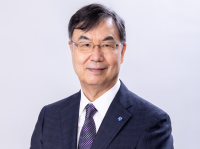 SAKAGUCHI Shimon, Distinguished Honorary Professor, The University of Osaka(Overview)Regulatory T cells (Tregs) account for approximately 10% of peripheral CD4+ T cells in animals. When Tregs are depleted in healthy animals, a variety of lesions closely resembling human autoimmune diseases such as thyroiditis and type 1 diabetes develop, along with allergic diseases. Treg depletion also triggers immune responses against intestinal bacteria, resulting in inflammatory bowel disease. Expansion of Tregs can suppress these abnormal or excessive immune responses and enable stable engraftment of transplanted organs. Conversely, depletion of Tregs within tumors can trigger and enhance immune responses against cancer cells. In this lecture, I will discuss the mechanisms by which the immune system distinguishes self from non-self, and the outlook for immunotherapies targeting autoimmune and allergic diseases, cancer, and organ transplantation.
“Regulatory T Cells: From Their Discovery to the Development of New Immunotherapies” -
Presentation1
-
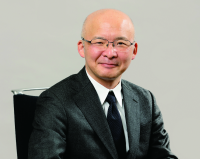 HOSEN Naoki, Professor, Department of Hematology and Oncology, Graduate School of Medicine, The University of Osaka(Overview)In the past, low-molecular-weight compounds were the mainstay of pharmaceuticals. Today, however, high-molecular-weight pharmaceuticals-centered on antibody drugs-have become extremely prevalent. Now, a new category is emerging: "cell-based therapeutics," which utilize living cells as "medicines." CAR T cells for blood cancers are a prime example. These cells proliferate after being administered into the body and demonstrate a level of efficacy that was previously unthinkable with conventional drugs. They are now saving patients who could not be cured just a few years ago. The treatment involves collecting lymphocytes from the patient, genetically engineering them to transform into CAR T cells that attack only cancer cells, and reintroducing them into the patient’s bloodstream. Similarly, various types of immune cells can be genetically modified to perform necessary functions and used as medicines. These cells are called "designer immune cells," and various types are currently under development. In this lecture, I will discuss the current status of CAR T-cell therapy and the future prospects of "designer immune cell" treatments.
“Current Status and Future Prospects of Designer Immunotherapy: The Era of Using Cells as "Medicines"” -
Presentation2
-
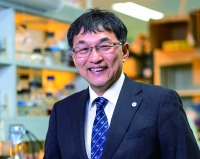 OMASA Takeshi, Senior Vice President, Dean, Professor, Graduate School of Engineering, The University of Osaka(Overview)Bioindustry is a growth sector that will drive industrial society in the 21st century. Within the government’s framework for formulating growth strategies, there are a wide range of industry fields related to biotechnology, including “synthetic biology and biotechnology,” “drug discovery and advanced medical care,” and “food technology”.
"Japan’s Growth Strategy and the Potential of The University of Osaka"
In this presentation, among these areas, we focus on “synthetic biology and biotechnology” which is related to biomanufacturing using biotechnology, and explain its characteristics, its integrated expansion across various industries, as well as the University of Osaka’s potential in this field and future trends. -
Presentation3
-
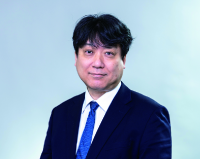 NAKANO Takayoshi, Distinguished Professor and Vice Dean, Graduate School of Engineering, The University of Osaka(Overview)To achieve both economic development and nature positive, Materials & Green innovation are essential. In recent years, 3D printing (3DP) has attracted attention as a technology to support the future innovation. 3DP is a cutting-edge technology that will greatly transform the future, evolving in the interdisciplinary fields of various academic disciplines, and the University of Osaka aims to position 3DP as one of its representative technologies. Metallic 3DP, for example, has the potential to be applied in a wide range of fields such as aerospace, medical device, environment and energy, and automobiles, and is expected to be a technology for realizing high-value-added, high-performance, complex-shaped metal products. In addition, by skillfully utilizing the powder bed fusion (PBF) method, development is progressing not only on controlling the shape but also on controlling the material parameter at the atomic level. In other words, metallic 3DP is expected to be a future technology that enables material-driven design based on the control of microstructures and crystallographic texture optimized for each location. In this presentation, I will also introduce an example the development of a 3DPrinted future-type spinal spacer guiding the high-quality bone.
“Cutting-edge 3D printing as a trigger for material & green innovation” -
Presentation4
-
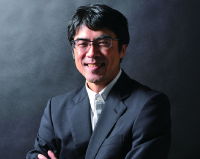 MORI Yusuke, Professor, Graduate School of Engineering, The University of Osaka(Overview)A nonlinear optical crystal, CsLiB₆O₁₀ (CLBO), discovered at The University of Osaka in 1993, exhibits outstanding properties, enabling the highly efficient generation of deep ultraviolet (DUV) laser light through wavelength conversion. However, due to the strong hygroscopic nature of cesium (Cs), one of its constituent elements, practical application as a wavelength conversion material was initially extremely challenging. Subsequent technological advancements successfully overcame these issues, and CLBO is now widely used as an indispensable component in semiconductor manufacturing equipment.
“Cutting-Edge Semiconductor Manufacturing Processes Enabled by CLBO crystal Discovered at The University of Osaka”
With the commercialization of extreme ultraviolet (EUV) lithography and the continued scaling of semiconductor devices to nodes below 2 nm, DUV laser light generated using CLBO crystals has become essential, particularly in wafer inspection processes. Looking ahead, CLBO-based DUV lasers are also expected to play a critical role in advanced semiconductor packaging, including chip dicing and via formation.
As such, CLBO has become a key material underpinning the production of cutting-edge semiconductor chips, which form the core of generative AI technologies. Reflecting its growing strategic importance from the perspective of economic security, CLBO was designated last year as the first semiconductor-related material to be subject to export control regulations under Japan’s Foreign Exchange and Foreign Trade Act -
Presentation5
-
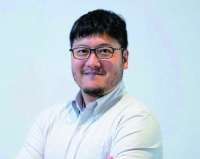 NEGORO Makoto, Deputy Director, Professor, Center for Quantum Information and Quantum Biology, The University of Osaka(Overview)To enable visitors at Expo 2025 Osaka, Kansai to experience a real quantum computer, The University of Osaka developed a fully domestically produced quantum computing system. Hardware components, including the dilution refrigerator, control electronics, cables, and amplifiers, were built in collaboration with a wide range of Japanese companies. The software stack was developed through joint efforts and publicly released on GitHub, enabling anyone to use, modify, and contribute to the stack. This is not a one-time demonstration for the Expo, but an ongoing open development. During the Expo, more than 20,000 visitors experienced the system, and since then it has been actively utilized by companies seeking practical quantum applications as well as by students learning quantum computing. In this talk, we present the development, latest results, and future perspectives of this open science project.
“A quantum computer built by everyone, used by everyone.” -
Presentation6
-
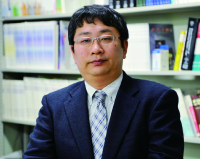 FUJIOKA Shinsuke, Professor, Institute of Laser Engineering, The University of Osaka(Overview)Brilliant beams of light-lasers. Using this cutting-edge technology, research on “fusion energy,” which generates energy from hydrogen, is advancing rapidly worldwide. The University of Osaka has played a leading role in this field as one of the three major global hubs, alongside the United States and Europe, and has driven international research networks. Fusion energy is widely regarded as the “ultimate energy source” for a sustainable society, as it produces no carbon dioxide and relies on abundant fuel resources. Its realization represents a grand challenge of integrated science, requiring the convergence of quantum science, materials science, control, measurement, information science, and even the humanities and social sciences. Beyond serving as a core academic center, the University of Osaka also functions as a key hub for industry–academia co-creation. EX-FUSION, a university-founded startup, is advancing the social implementation of laser fusion energy and is moving toward practical realization by integrating expertise from Japan and abroad. In addition, Shuji Nakamura, a Nobel Laureate in Physics, serves as CEO of Blue Laser Fusion Inc. Inspired by the university’s technological strengths, the company has established the “Blue Laser Fusion Energy Research Alliance Laboratories at The University of Osaka.” In this talk, I will present the forefront of laser fusion research at The University of Osaka and highlight how industry–academia collaboration is driving the emergence of next-generation energy from Osaka, along with the outlook toward its societal implementation.
“From Osaka: Laser Fusion Energy Lighting Up the Future” -
お申込み方法
- (How to Register)Please register using the form below.(click the red button below)
An admission ticket will be sent to you by email about one week before the event. The registration deadline is Thursday, August 20, 2026.
If you need to cancel your registration after applying, please be sure to contact the secretariat.
úお申し込みフォームへ -
Handling of Personal Information
- The information you provide will be used for the business operations of Osaka Chamber of Commerce and Industry, as well as for various communications and information from OCCI (including business information via e-mail).
We will provide this information to co-organizing and cooperating organizations as a participant list.
We will treat personal information as having been approved by all applicants.
If an application is submitted on behalf of the applicant by a company or organization, we will assume that the application was submitted with the applicant’s prior consent.
※Basic Policy for the Protection of Personal Information Including Specified Personal Information
https://www.osaka.cci.or.jp/privacy_policy/index.html
※Notice Concerning Handling of Personal Data Excluding Specified Personal Information
https://www.osaka.cci.or.jp/privacy_policy/index2.html -
お問い合わせ先
-
Contact:
Osaka Chamber of Commerce and Industry Industry Division
E-mail:sports@osaka.cci.or.jp
- 2026.7.30更新